







Related News
Contact Us
Steel Building Construction: Design to Handover Stages
2026-08-28
An imported steel building moves through ten stages: structural calculation, drawing approval, factory fabrication, pre-assembly inspection, surface treatment, export packing, container loading, customs clearance, international shipping and on-site bolted erection.
Most process guides written for a domestic market stop at four phases: planning, design, fabrication and installation, ending with a local occupancy certificate. That sequence works when the fabricator and the job site sit in the same country. It leaves out everything that happens once a building has to cross a border in a shipping container, which is the part that actually determines your delivery date if you’re buying from overseas.
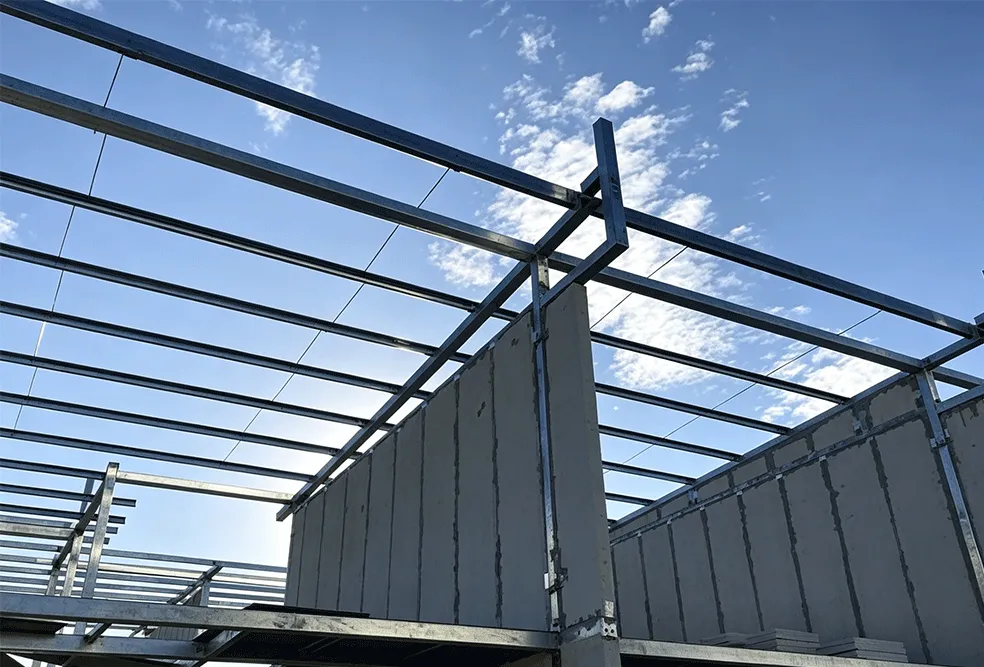
Compare the Two Sequences Before You Plan a Schedule
Compared with typical domestic pre-engineered building programs, a cross-border steel building adds four stages that rarely appear in North American process guides: pre-assembly inspection, export packing, customs and shipping-document coordination, and international logistics. Skipping any of these in your schedule is the most common reason imported-building timelines slip.
| Stage | Domestic PEB Sequence | Imported Steel Building Sequence |
| Planning & design | Yes | Yes, plus destination-code drawing approval |
| Foundation work | Site contractor, parallel to fabrication | Same |
| Fabrication | Yes | Yes, at the export factory |
| Pre-assembly inspection | Rarely documented as a separate step | Standard step before packing |
| Surface treatment | Often combined with fabrication | Separate stage, verified before packing |
| Export packing | Not applicable | Required |
| Container loading & customs | Not applicable | Required |
| International shipping | Not applicable | Required, port-to-port |
| On-site erection | Yes | Yes, bolted connections |
| Occupancy/handover | Local authority sign-off | Local authority sign-off, plus buyer acceptance of shipped condition |
Stage 1: Structural Calculation and Engineering
The fabricator’s engineering team calculates member sizes, connection loads, and foundation reactions based on the site’s wind, snow, seismic, and soil data. For an industrial building, this stage typically covers:
- Load case development from site-specific climate and soil data supplied by the buyer or a local geotechnical report
- Steel grade and section selection for columns, rafters, and bracing
- Crane runway beam sizing, where an overhead crane is specified
- Connection design for bolted field joints
- A structural calculation package the buyer’s engineer or local authority can review
Verification: the stage is complete when the calculation package is signed by a registered structural engineer and matches the site’s actual load data, not a generic default.
Customized Drawing Approval Is Where Delays Usually Start
Fabrication drawings translate the calculation package into shop drawings: column and rafter dimensions, bolt-hole patterns, purlin spacing, and connection details. The buyer reviews and signs off before cutting starts.
The step most guides skip: drawings for an imported building must be checked against the destination country’s structural code, not only the exporting country’s standard. A steel-frame design that satisfies Chinese national codes is not automatically compliant with, for example, ANSI/AISC 360-22, the American Institute of Steel Construction’s specification for structural steel buildings, or the relevant national annex under EN 1993 (Eurocode 3) in an EU market. Buyers working with a local permitting engineer should confirm which code governs before, not after, drawings are approved.
Stage 3: Factory Fabrication
Approved drawings go to the shop floor for cutting, drilling, and welding of columns, beams, purlins, and connection plates. Sinomega runs this stage on two Japanese RCB steel-structure production lines across a 7,500 m² facility in Qingdao, Shandong Province.
Fabrication tolerance matters more for an imported building than a domestic one, because correcting a misaligned bolt hole after the container has shipped means either an on-site rework or a replacement part shipped separately — both add weeks, not days.
Stage 4:The Pre-Assembly Step Most Buyers Assume Doesn’t Exist
A common misconception among first-time overseas buyers is that “fabrication complete” means the components are ready to load. Skipping trial pre-assembly at the factory is the single most frequent cause of bolt-hole misalignment discovered on-site, after the building has already been shipped.
Pre-assembly inspection means test-fitting major connections — column-to-rafter, rafter-to-rafter, base plate-to-anchor bolt layout — on the factory floor before any component is packed. Ask your supplier for photographic or video evidence of this step, not just a written statement that it happened. If a supplier cannot produce that evidence, treat the fabrication tolerance as unverified.
Stage 5: Surface Treatment
Surface preparation and coating are applied after fabrication and pre-assembly, and confirmed again before packing since a coating flaw is far cheaper to fix in the factory than after installation. Typical scope includes blast cleaning, primer, and a top coat matched to the site’s corrosion category — coastal and island sites need a heavier system than an inland site with low humidity.
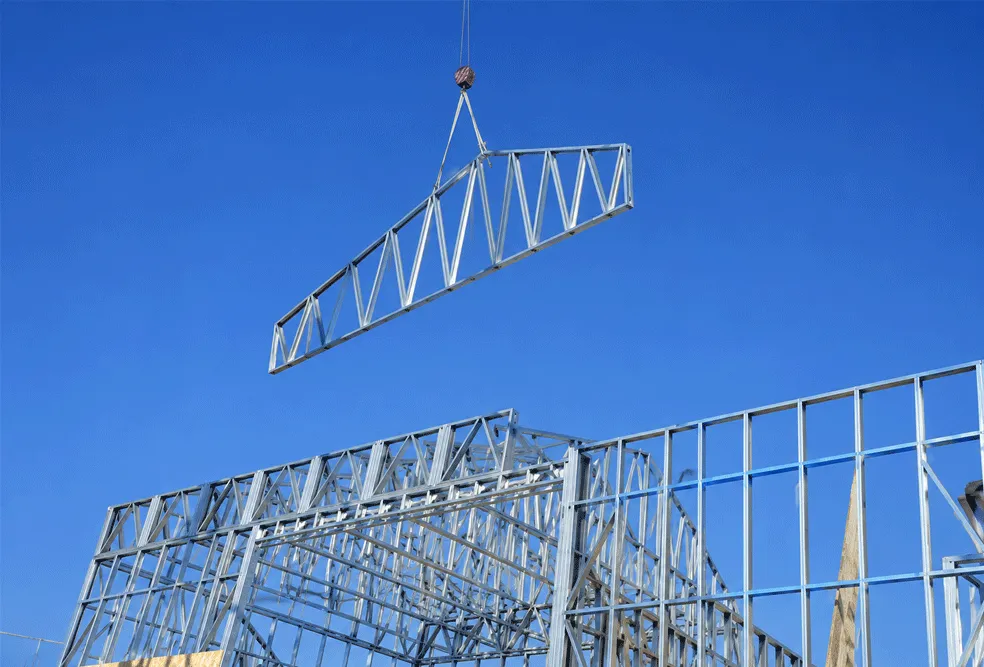
Stage 6: Export Packing
Components are bundled, wrapped, and labeled for ocean freight rather than local truck delivery. This is a distinct discipline from domestic packaging: fasteners and small parts are boxed and numbered against the shop drawing set, edges and threads are protected against transit corrosion, and each bundle is weighed and measured for the stevedore’s lifting plan. A packing list that doesn’t map cleanly to the erection drawing numbers is a red flag before the container is sealed, not after it arrives.
Stage 7: Container Loading and Shipment Coordination
Bundles are loaded into standard or flat-rack containers depending on member length and weight. Column and rafter lengths beyond standard container dimensions may require open-top or flat-rack equipment, which affects freight cost and port handling options — a detail worth confirming with the freight forwarder before, not after, booking.
Stage 8:Customs and Shipping Documents: The Paperwork Domestic Guides Never Mention
A domestic building never crosses a customs checkpoint. An imported one needs a commercial invoice, packing list, bill of lading, and often a certificate of origin, each matched precisely to the shipped quantities. Steps in this stage:
- Prepare export documentation matching the final packing list
- Coordinate the bill of lading with the shipping line
- Confirm import tariff classification and any required destination-country permits with the buyer’s customs broker
- Verify the certificate of origin, if required by the destination market
- Release documents to the buyer’s broker ahead of vessel arrival to avoid port storage charges
Stage 9: International Logistics
Freight moves port-to-port by ocean carrier, then to the site by truck. Transit time depends on the specific origin-destination port pairing and current carrier schedules — a variable to confirm with the freight forwarder for each project rather than assume from a general average.
Stage10: On-Site Bolted Installation
Erection follows the sequence set in the approved drawings: foundation bolt verification, column and rafter erection by crane, bracing, then purlins and wall or roof systems. Bolted connections are specified for this stage rather than field welding, which reduces the amount of on-site cutting and welding work and the associated weather and quality risk. Installation guidance and, where agreed, on-site technical support are part of the standard scope; full turnkey installation crew mobilization is a separate line item to confirm at contract stage.
What This Product Line Actually Specifies
Industrial Steel Buildings — the product line built around this -stage process — are engineered per project rather than sold under a catalog model number. Published parameters:
| Parameter | Specification |
| Clear span | Up to 36 meters without internal columns |
| Connection method | Bolted, or project-specified alternative |
| Construction method | Factory-prefabricated components |
| Customization | Building height, column layout, insulation, ventilation, dock doors, fireproofing, wall/roof systems, surface treatment, future expansion |
| Published service life | More than 50 years, with the structure and protection system properly specified and maintained |
| Indicative price | FOB USD 35–70/m² |
The FOB price band depends on design and material selection, and it excludes shipping, customs duties, and installation. A firm quote requires the buyer’s span, steel grade, wind/snow/seismic load data, floor count, crane loads, roofing and wall material choice, insulation and fireproofing requirements, surface-treatment system, accessory list, destination port, shipping method, and installation scope. Where any of those inputs is missing, the honest answer is “request a quote,” not a number.
FAQ
How long does the full sequence take from structural calculation to handover?
There’s no single published duration, because it depends on span, floor count, steel grade, the specific origin-destination port pairing, and the installation crew’s mobilization schedule. Request a stage-by-stage timeline tied to your project’s actual specifications rather than a generic average.
Does the FOB USD 35–70/m² price include shipping and installation?
No. It’s a factory-gate price for industrial steel workshop and warehouse buildings, dependent on design and materials. Shipping, customs duties, and installation are priced separately once the destination and scope are confirmed.
What actually causes bolt-hole misalignment on-site?
In most documented cases, it traces back to skipping trial pre-assembly at the factory. Ask for photographic or video evidence that major connections were test-fitted before packing.